The Expertise Reversal Effect: When Scaffolding Becomes a Ceiling
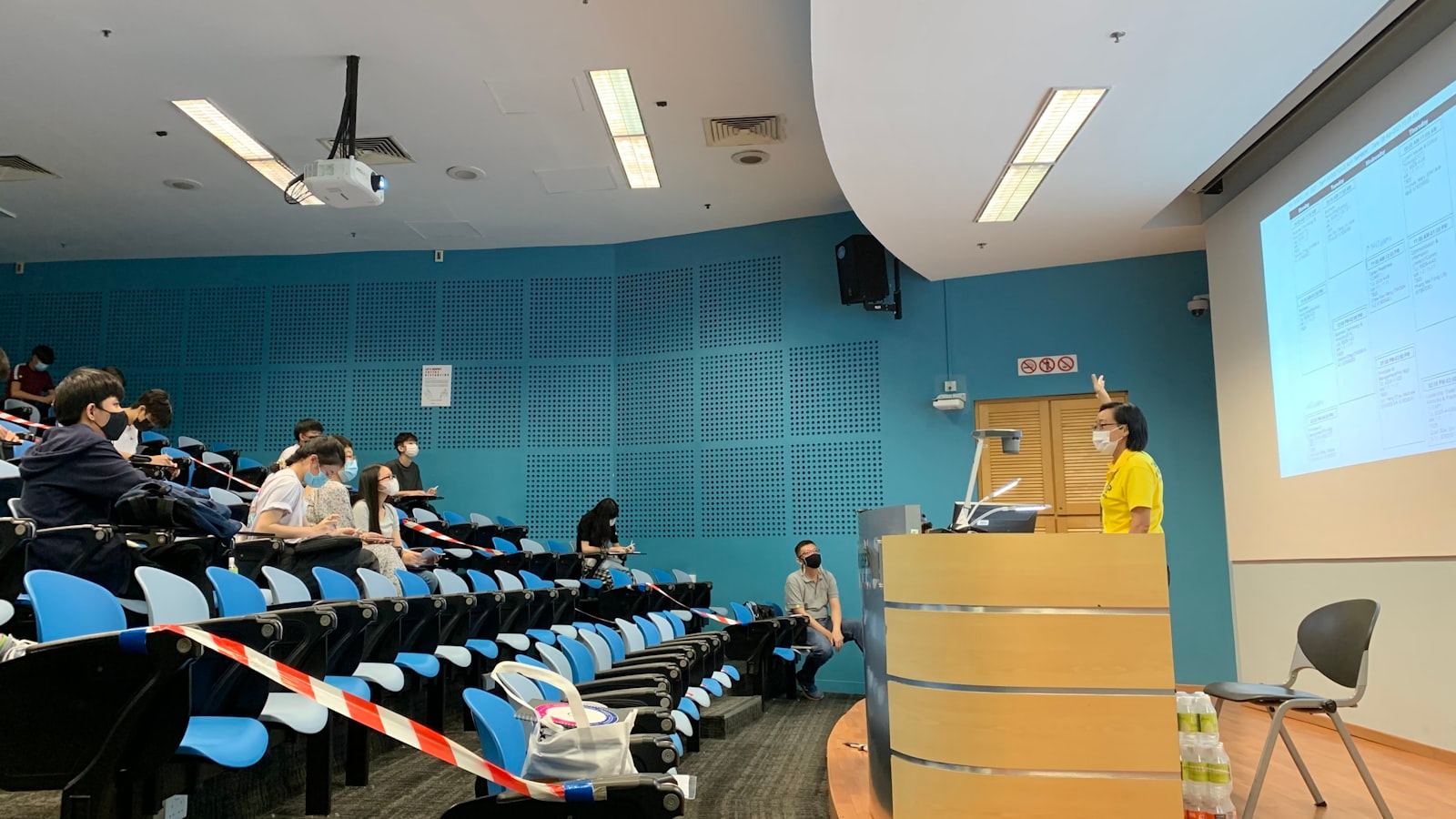
A high school physics teacher in Adelaide once told me about a class she ran for four years that never quite sat right. The lessons were meticulously designed. Each new topic began with fully worked examples, each step annotated, each inferential leap softened with a diagram. Her weakest students thrived. Her strongest students, the ones who would later go on to study engineering at Melbourne and Monash, grew listless and began to coast. She had assumed she was failing them on motivation. She was failing them on something subtler.
What she had encountered, without knowing the name for it, was the expertise reversal effect, a finding out of the University of New South Wales that should have made every teacher reconsider their materials and somehow hasn’t.
Slava Kalyuga, working with John Sweller at UNSW through the late 1990s and into the 2000s, began to notice something strange in his instructional design experiments. Techniques that reliably helped novices, things like worked examples, step-by-step guidance, and heavy scaffolding, would at some threshold of learner expertise stop helping. Past that threshold, they started actively hurting. The same worked example that sped up a beginner’s learning slowed down an advanced student. The guidance that had been a ladder became a ceiling.
Kalyuga’s 2003 paper in Educational Psychologist, written with Ayres, Chandler and Sweller, laid the evidence out cleanly. Across a range of domains, from engineering statics to database query design, advanced learners consistently performed better when given minimal guidance and less well when given the detailed walkthrough that had been optimal for beginners. The effect was not small. In some studies the performance difference between the two conditions was large enough to reshape a grade distribution.
The theoretical explanation comes from cognitive load theory, the framework Sweller began developing in the 1980s. When a novice encounters new material, their working memory is overwhelmed by what Sweller calls intrinsic load, the sheer unfamiliar complexity of the content. A worked example reduces that load by doing some of the problem-solving for them; it frees capacity for schema formation. An expert, by contrast, already has the schemas. When you hand them a worked example, you force them to process redundant information they could have skipped. The expert now has to reconcile the teacher’s stepwise procedure with their own more compressed internal representation, and the reconciliation itself eats cognitive resources. This is sometimes called the redundancy effect, and it explains why clever students roll their eyes at textbooks that explain too much.
The pattern generalizes well beyond worked examples. Any scaffold a teacher erects, whether prompts, hints, partial solutions, guided notes, annotated diagrams, produces the same U-shape. It helps until it hinders. This is one of the reasons cognitive load theory is less a fixed prescription than a moving target. The optimal load depends on the learner’s current state, and the learner’s state changes during the lesson.
There is a harder lesson embedded here, one that unsettles both teachers and parents. Keeping advanced students comfortable is often the same thing as letting them stagnate. A class that feels well-supported to every learner is almost certainly under-challenging some of them. And the signal that a student has outgrown a scaffold tends to arrive late. They still answer correctly. They still produce the right steps. What you lose, invisibly, is the rate of their growth.
This is why instructional designers influenced by Robert Bjork have become wary of uniform support. Bjork’s desirable difficulties framework argues that a certain amount of struggle during encoding is not a bug in the lesson but a feature of the learning. Remove too much friction and you also remove the cues the brain uses to consolidate. The expertise reversal effect adds a twist: the friction a beginner needs removed is the friction an expert needs restored.
Paul Kirschner, Sweller, and Richard Clark stirred considerable debate in 2006 with a paper in Educational Psychologist arguing that minimal-guidance instruction, meaning discovery learning, inquiry-based learning, and problem-based learning, does not work for novices. They were largely correct. But the counterpoint is that minimal guidance works for the already-competent, which is part of why advanced graduate seminars and apprenticeships often feel chaotic from the outside and productive from the inside. The people in them have passed the reversal point.
In practice, adapting to the expertise reversal effect is harder than acknowledging it. A class contains students at many points along the learning curve. A textbook is written once and read by everyone. Intelligent tutoring systems can dynamically fade scaffolds as a learner’s competence grows, which is one of the few genuinely promising applications of adaptive technology in education, though the implementations that exist tend to be clunky. For the individual learner, the implication is simpler. As you improve, drop the supports. Put away the annotated walkthrough. Stop color-coding your notes. Stop watching the tutorial videos you have watched six times. Produce the solution, and let the production be difficult.
This connects to why retrieval practice tends to scale with expertise rather than collapse under it. Pulling information from memory does not become redundant as you learn more; it becomes a way of exercising increasingly sophisticated schemas against increasingly pointed questions. Worked examples have a diminishing return. Retrieval does not.
There is also a caveat worth making explicit. The expertise reversal effect does not mean that advanced students should be thrown into the deep end with no resources. It means the kind of resource matters. An advanced student benefits from challenging problems, from open-ended projects, from exposure to edge cases, from being asked to explain their reasoning to someone slightly less advanced. What they do not need is another example of the base case. The base case is the one thing they have already absorbed.
The Adelaide physics teacher, once she understood what was happening, rewrote her unit on electromagnetism with a branching structure. Students who needed the scaffolded sequence got it. Students who had already moved past that threshold got harder problems, without worked solutions, and a weekly conversation about which approach they had tried and why. Her weaker students continued to do well. Her stronger students, for the first time, looked alert.
Photo via Unsplash.