Asynchronous vs. Synchronous: What the Research Says
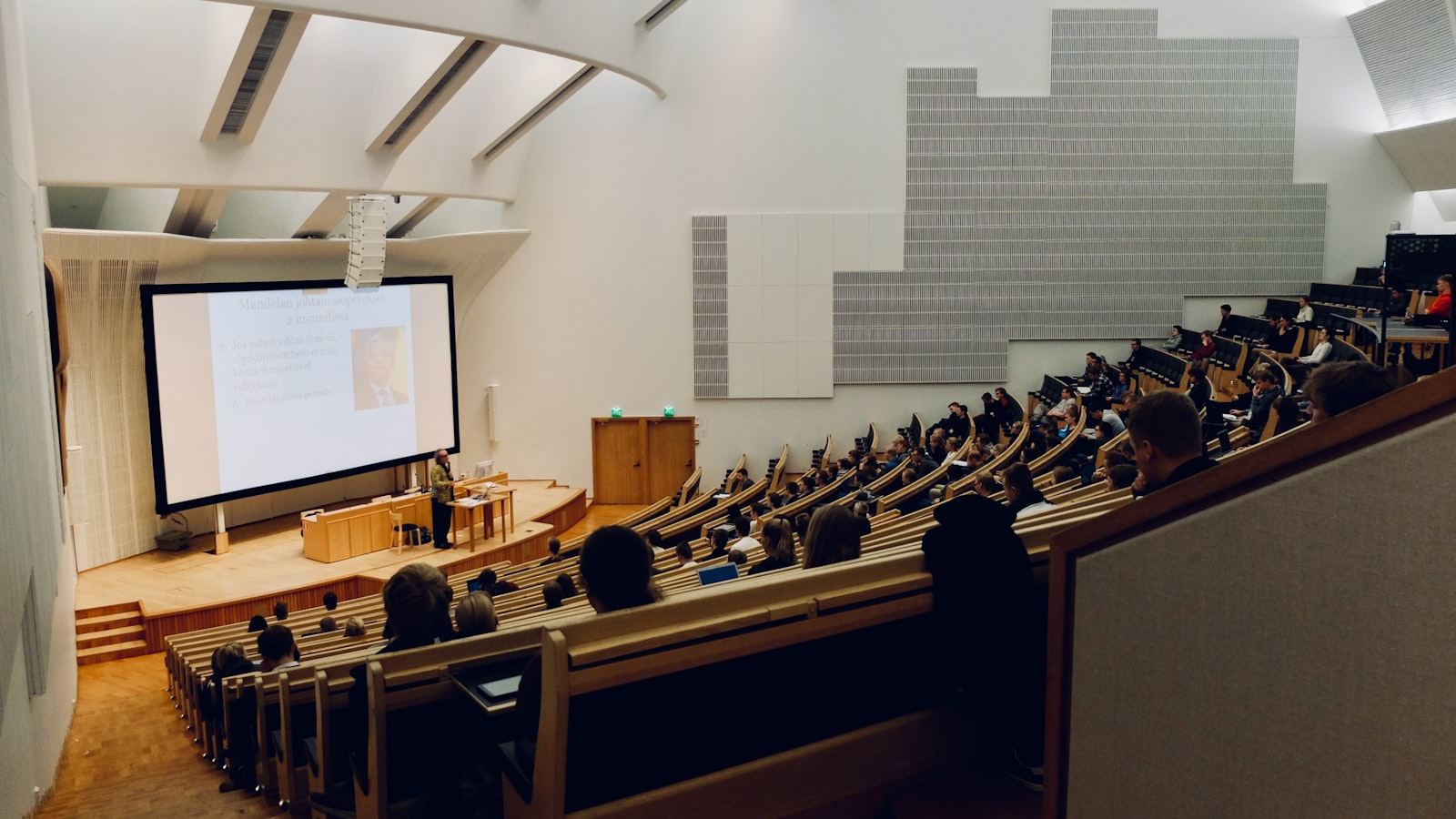
In the fall of 2020, a community college in central Ohio ran an experiment it had not planned to run. Two sections of the same introductory statistics course, same instructor, same syllabus, same textbook, had to be split because of enrollment. One section met on Zoom twice a week at 10 a.m. The other section got the same lectures as recorded videos and a weekly discussion board. At the end of the semester, the synchronous section had slightly higher average grades. The asynchronous section had much lower withdrawal rates, and when the dean pulled demographic data, the asynchronous students were disproportionately parents, shift workers, and students who commuted more than forty minutes. The dean had a difficult meeting with herself about what “better” meant.
Almost every honest conversation about asynchronous versus synchronous learning since 2020 has looked like that meeting. The research literature, which has grown substantially since the pandemic forced every university and corporate training department into the question, is not actually ambiguous. It says clearly that each format wins on some dimensions and loses on others, that the right comparison is almost never between the two in the abstract, and that design quality inside each format matters more than the format itself. The reason the public conversation keeps lapsing into cheerleading or doom is that most people asking the question have a pre-existing institutional interest in the answer.
Start with the historical anchor. Barbara Means, then at SRI International, led a 2009 meta-analysis for the U.S. Department of Education that pulled together studies comparing online with face-to-face instruction. The headline finding, which got more attention than the authors intended, was that online learning produced slightly better outcomes than classroom learning on average. The buried finding, which deserved more attention, was that most of that advantage came from hybrid courses that combined online and face-to-face elements, and that pure online instruction was roughly equivalent to pure classroom instruction when both were designed well. Means and her colleagues were careful to say that the studies mostly compared motivated adult learners in well-designed online programs against conventional classroom instruction, which is a narrower claim than “online is better.” A lot of people stopped reading after the headline.
The post-2020 literature has both refined and complicated this picture. A 2021 meta-analysis by Richardson and colleagues focused specifically on asynchronous online discussion found that well-moderated async discussions produced levels of cognitive engagement comparable to in-person seminar discussion, and in some cases higher, because students had time to compose their responses and because quieter students participated more. A separate 2022 review of synchronous online instruction found that live video courses retained most of the engagement benefits of in-person teaching when class sizes were small enough for real interaction, and lost most of them when classes exceeded about thirty students. These are compatible findings, and together they suggest the obvious shape of a good online program: async for reading, reflection, and written discussion; sync for small-group conversation, problem-solving, and the kind of moment when a student needs to ask a follow-up.
Where sync clearly wins is on engagement and on the kind of complex discussion where meaning emerges from interaction. Doing a literature seminar asynchronously is possible and sometimes good, but the conversational texture is different. A live seminar can follow a thread no one predicted. A message-board thread can only respond to what has already been posted. For subjects where the pedagogy depends on that live unfolding, including most seminar-format humanities courses, clinical case discussions in medicine, and the kind of design critique that studio classes depend on, sync is not merely preferable. It is the substance of the course.
Where async wins is on access, on flexibility, and on certain kinds of cognitive work. Students can rewatch a lecture. They can pause to take a note without being embarrassed. They can fit the course around a night shift or a child’s nap. Researchers studying cognitive load during study have pointed out that the ability to self-pace instruction dramatically reduces extraneous load for students who cannot keep up with live pacing, and that this particularly benefits non-native speakers, students with ADHD, and anyone whose working memory is under pressure for reasons unrelated to the course content. Async also scales in a way sync does not. A well-designed async course can serve ten thousand students at quality that a live course cannot replicate beyond a few dozen.
There is a second, less discussed axis, which is the difference between learning information and learning to produce work. Async formats are quite good at transferring content, particularly when paired with retrieval practice in the form of low-stakes quizzes and spaced review. They are weaker at producing feedback on student work, because giving real written feedback on real assignments is expensive and slow whether or not the course is online. The most consistent weakness in asynchronous courses is not the lecture quality, which is often excellent, but the feedback loop, which is often neglected.
Corporate training has run a parallel experiment on a larger scale. Since the pandemic, most large employers have moved mandatory compliance training and basic skills training to async video modules, and kept leadership development, onboarding, and anything requiring behavior change in some form of synchronous or hybrid format. The evidence that this split produces better outcomes is reasonably strong, and the cost savings are dramatic. McKinsey and Deloitte have both published internal surveys showing that L and D leaders overwhelmingly plan to keep this structure, partly because it works and partly because it fits distributed workforces. The uncomfortable corollary is that a lot of async compliance training is not trying to teach anyone anything. It is trying to document that training occurred, which is a different objective that the format is also well-suited to.
The question that seems most alive in the current research, and that I find the most interesting, is whether async formats can close the engagement gap through better design rather than through conversion to sync. A few promising directions have emerged. Cohort-paced async courses, where the content is pre-recorded but everyone moves through it on roughly the same schedule, produce much higher completion than fully self-paced async. Active-response formats, where students are required to post brief written responses or complete short problem sets before moving to the next module, outperform passive video. Social features that make classmates visible to each other, even asynchronously, produce measurable engagement improvements. None of these are revolutionary. All of them are being ignored by a great deal of the async content that actually exists in the wild.
The honest summary, then, looks something like this. For large-scale content delivery to motivated adult learners, async works well and costs less. For seminar-style discussion, for the early stages of skill acquisition where feedback is crucial, and for any learning goal that depends on interpersonal practice, sync remains meaningfully better. Hybrid designs that use each format for what it does well tend to outperform either purist version. The format is not destiny. The design is.
What the dean at the Ohio community college eventually concluded was that neither section was better than the other, and both were better than no section at all. She kept offering both, and she stopped trying to decide which to privilege. This is probably the right posture for most institutions, and it is not the posture they will be pushed into by either budget pressure or ideological commitment. The temptation to pick a side remains strong. The evidence, for what it is worth, does not support picking one.
Photo via Unsplash.