Obsidian’s Quiet Influence on Academic Workflows
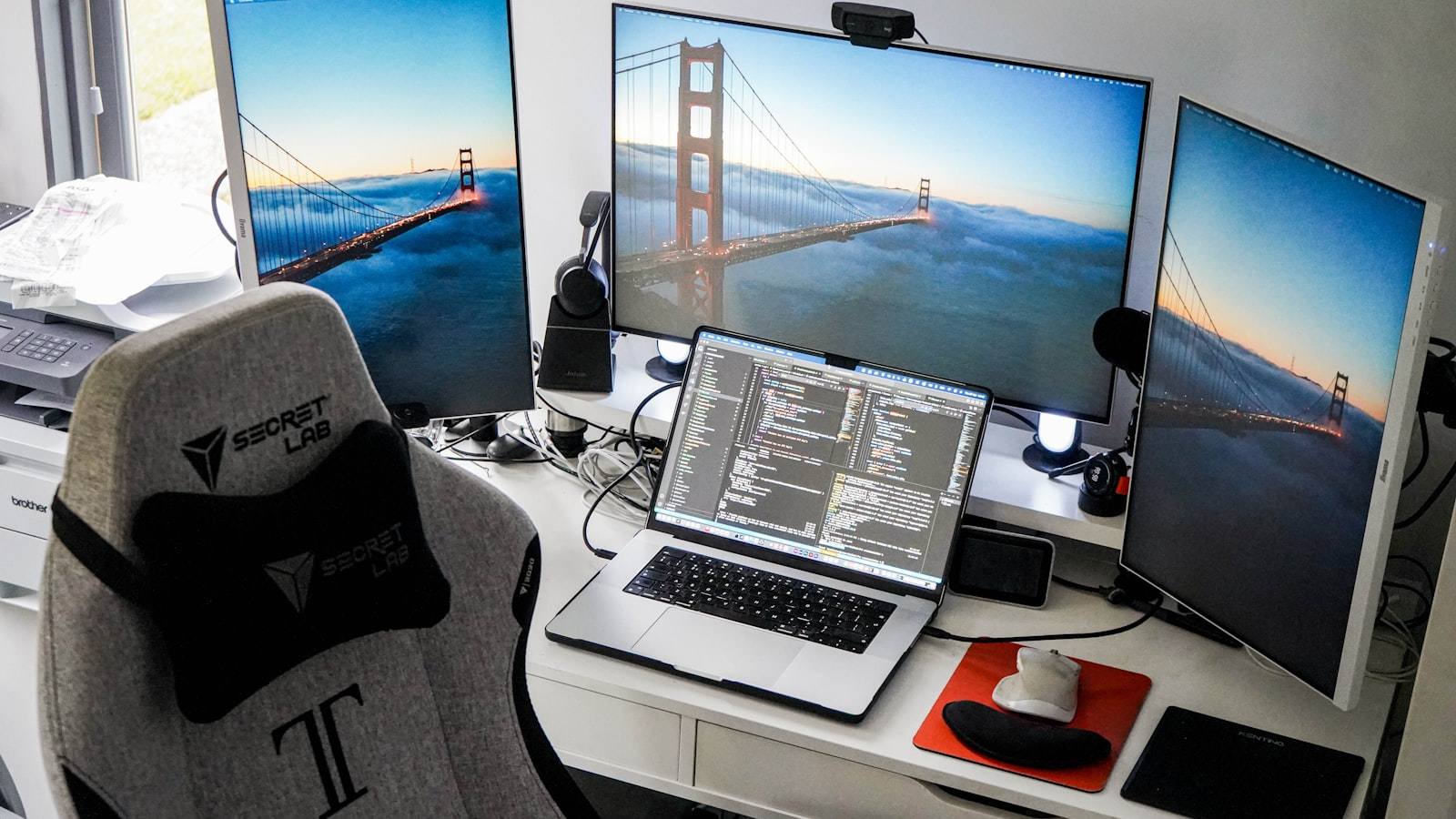
Maya Chen keeps her dissertation in a folder of plain text files on a seven-year-old MacBook. She is a fifth-year in cognitive neuroscience at a state university in the Midwest, her committee wants a chapter draft by June, and the folder contains roughly 2,400 markdown notes accumulated over four years of reading. The notes live nowhere in particular. They sit on her laptop, sync to a hard drive she keeps in a desk at the lab, and mirror to a cloud folder she rarely opens. When she quits Obsidian and opens the same folder in BBEdit, every file is still readable, still editable, still hers. This is the appeal, and it is quieter than the product marketing suggests.
Obsidian launched in 2020, built by a small team led by Erica Xu and Shida Li, originally the same pair behind the habit-tracking app Dynalist. The premise was unfashionable at the time. Notion had raised hundreds of millions on the bet that knowledge work belonged in the cloud, in structured blocks, behind a login. Roam Research had attracted a cult of researchers with its bidirectional links and daily notes. Obsidian offered something older: a folder of files on your own computer, written in a format Tim Berners-Lee could have parsed in 1993. The links between notes were the novelty. The storage layer was not.
Something shifted around 2022. You could track it through the dissertations thanking Obsidian in acknowledgments, through the quiet proliferation of “my PhD vault” YouTube tours, through the academic Twitter accounts that began posting screenshots of their graphs. By 2024, it had become difficult to attend a methods workshop for humanities grad students without someone asking whether the instructor used Obsidian, Zotero, or both. The app had no paid marketing. It had a forum, a Discord, and a plugin API.
Why it won among academics is not mysterious once you spend time with the work. A dissertation is a long-running research project that generates thousands of fragments: reading notes, methodology memos, interview excerpts, half-formed arguments, citations copied from databases, marginal observations. These fragments are valuable because of how they connect, not because of where they sit. A file system that lets you link any note to any other note, render those links as a navigable graph, and preserve the text in a format that will still open in 2045 solves a problem that Microsoft Word was never designed for. Comparative analyses of note-taking systems tend to bury this point under feature tables, but it’s the core of the appeal. Plain text outlives software.
The lock-in question matters more to academics than to most knowledge workers because dissertations run long. Chen started her program in 2021 using Notion. She migrated in 2023 after a database she had spent months tagging became too slow to load on wifi. The export process took three weekends and produced a pile of CSVs and Markdown files she had to re-link by hand. She has said, several times, that she will not do that again. Obsidian’s guarantee is simpler than Notion’s feature list: your notes remain files on your disk, and the application is one of many that can read them.
The plugin ecosystem is where the story gets complicated. Obsidian ships with a spartan core and exposes a community plugin API that, as of the current moment, lists more than 1,800 extensions. There are plugins for spaced repetition, for Zotero integration, for Kanban boards, for Mermaid diagrams, for live collaboration, for converting notes to slide decks. Some are excellent. The Dataview plugin, written by Michael Brenan, turns a vault into a queryable database and has become a load-bearing piece of how many researchers structure their notes. Others are abandoned, half-working, or actively hostile to the simplicity that made Obsidian appealing in the first place.
This is the trap. The optimization-over-work trap has a long history in academic tooling, and Obsidian is exceptionally good at enabling it. A graduate student with a chapter due can spend a week configuring a plugin stack, designing a zettelkasten schema, choosing between three competing daily-note templates, and reading forum threads about whether to use tags or nested folders, and emerge at the end of that week with a more beautiful vault and zero additional words of the chapter. The graph view is particularly seductive because it looks like thinking. It is not thinking. It is a visualization of hyperlinks.
There is good evidence that the act of writing notes in your own words, by hand or in plain text, supports learning more than passive re-reading. Research on active encoding versus rereading has been consistent for decades. But the benefit accrues to the work of articulating ideas, not to the act of file-managing them. A vault with 3,000 orphan notes is not a second brain. It is a landfill with tags.
The researchers who seem to get the most out of Obsidian treat it as a bicycle, not a gymnasium. They keep the plugin count low. They resist the urge to build elaborate personal knowledge management systems before they have any knowledge to manage. They use linked notes to surface prior thinking on a subject when they return to it, and they treat the graph view as a novelty rather than a work surface. Andy Matuschak, whose writing on evergreen notes has shaped how many people think about Obsidian without being specifically about it, has made this point with more elegance than most: the notes should be the thing, and the tool should get out of the way.
Chen’s current vault has 2,400 notes and six installed plugins. Two of them handle Zotero citation sync. One renders LaTeX. One provides a vim keybinding mode. The other two she cannot remember the purpose of and is vaguely thinking about disabling. She writes her chapter drafts in Obsidian because it is the fastest path from a thought to a file, and she exports to Word when her advisor needs to leave comments. The graph view is off. She turned it off in 2023 and has not missed it.
What Obsidian’s quiet rise probably means for academic workflows is not that every grad student should adopt it. It means the category of tools that respect the durability of a researcher’s output, plain text, open formats, local ownership, has finally caught up with tools that prioritize convenience. For longitudinal work, which is most academic work, this is more consequential than any particular feature list. A dissertation outlives most software companies. The notes should be able to outlive them too.
The risk that remains, and it is real, is the cognitive load of managing a system that can be infinitely customized. The discipline Obsidian demands is the discipline of not tinkering. That is a harder discipline than it sounds, especially in the fifth year of a program, especially in the weeks before a draft is due, especially when the alternative is writing.
Photo via Unsplash.